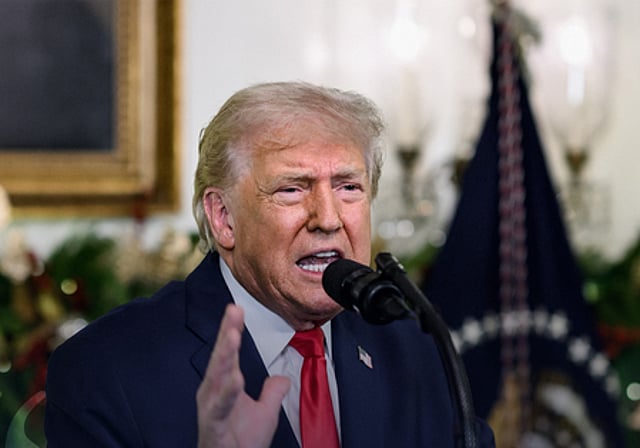

WASHINGTON / TEHRAN — U.S. President Donald Trump has sharply intensified his rhetoric toward Iran, openly calling for an end to Supreme Leader Ayatollah Ali Khamenei’s decades-long rule, asserting that it is “time to look for new leadership in Iran” amid one of the most violent protest movements the country has seen since 1979. Trump’s comments, made in an interview with Politico, represent a dramatic escalation in language between Washington and Tehran and underscore deepening tensions tied to internal unrest in Iran.
Trump accused Khamenei of overseeing the “complete destruction of the country” and ruling through violence and repression rather than respect, describing Iran as “the worst place to live anywhere in the world.” He also labelled the supreme leader a “sick man” and criticised the regime’s handling of widespread demonstrations that have swept across Iran for weeks.
The backdrop for Trump’s remarks is a period of prolonged instability in Iran triggered by nationwide protests that began in late December 2025 over economic hardship and quickly expanded into broader calls for political change. Rights groups report thousands of deaths and tens of thousands of arrests during the crackdown, making it one of the deadliest episodes of internal conflict in the Islamic Republic’s history.
Iran’s leadership has responded with its own sharp rhetoric. State media and Ayatollah Khamenei have accused Trump of inciting unrest and blame the United States for contributing to the violence, calling such allegations an “American conspiracy.” Tehran insists it will not hesitate to punish what it terms “terrorists” and “rioters,” while rejecting U.S. interference in its domestic affairs.
Though Trump stopped short of directly outlining specific U.S. policy actions beyond his critique, the exchange highlights the fraught state of U.S.–Iran relations, blending public demands for regime change with diplomatic contention. The sharp war of words unfolds at a moment when protests in Iran have largely subsided but leave unresolved questions about the regime’s future stability and the broader geopolitical implications for the Middle East.
If you’d like more context on the protests in Iran or analysis of the potential regional impact of these developments, just let me know.