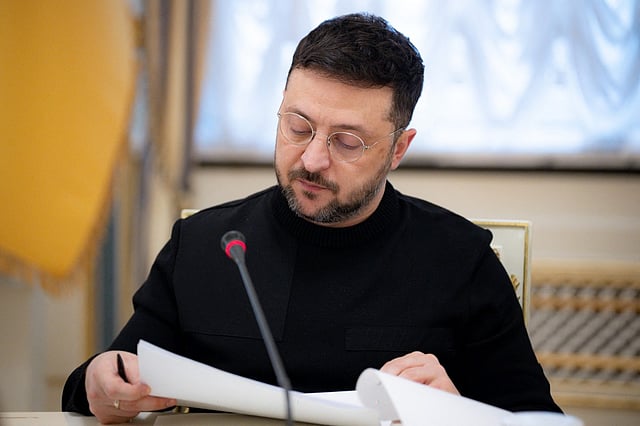

Ukrainian President Volodymyr Zelensky has unveiled a detailed US-backed 20-point plan aimed at ending the almost four-year war with Russia, marking one of the most serious diplomatic efforts yet to resolve the conflict. While the proposal reflects major concessions and a framework for peace, significant questions remain about territorial issues, Moscow’s willingness to agree, and how key elements would be implemented.
What the Plan Proposes
The plan, developed in coordination with U.S. negotiators and now under review by Russian authorities, lays out a comprehensive structure intended to bring an end to hostilities and pave the way for long-term stability:
Non-aggression and sovereignty guarantees: The agreement would establish a legally binding non-aggression pact between Russia and Ukraine, reaffirming Ukraine’s independence and territorial integrity.
Security guarantees: Ukraine would receive robust security guarantees from the United States, NATO, and European partners, modeled on Article 5-style commitments — meaning a coordinated response if Russia breaches the pact.
Military status quo: The plan allows Ukraine to maintain its armed forces at around 800,000 troops in peacetime, addressing Kyiv’s long-term defense needs.
Economic reconstruction: It includes a broad economic recovery strategy, with a proposed Ukraine Development Fund and combined investment efforts covering infrastructure, technology, energy, and reconstruction.
Territorial line of contact: For regions like Donetsk, Luhansk, Zaporizhzhia, and Kherson, the current frontline would be recognized as the de facto line of contact, with a working group to discuss any redeployments or potential special economic zones.
Elections and implementation: Presidential elections in Ukraine would be held after the peace agreement is signed, and a Peace Council chaired by the U.S. president would monitor and enforce compliance.
Key Questions and Unresolved Issues
Despite its ambition, the plan raises several major questions that could shape the future of negotiations:
1. Territorial disputes remain unsettled.
One of the central sticking points is who controls territory currently occupied by Russian forces. Moscow’s insistence on sweeping Ukrainian concessions — particularly on regions like Donetsk and Luhansk — remains a major obstacle. Ukraine succeeded in removing immediate demands for full withdrawal or recognition of Russian-claimed land, but how these areas are ultimately addressed is still unresolved.
2. Demilitarised zones and troop redeployment.
The proposal allows for the creation of demilitarised zones and potential Ukrainian troop withdrawals in parts of the east, but final decisions would require Ukrainian parliamentary approval or a referendum — adding political complexity.
3. Russia’s response is uncertain.
The Kremlin has yet to formally accept the revised plan. Russian President Vladimir Putin’s government has held firm on territorial and political demands that Kyiv and its Western backers view as unacceptable. This fundamental disagreement raises doubts about whether Moscow will engage constructively.
4. NATO membership and long-term security.
While the plan assures strong security ties with NATO members and Western partners, Ukraine’s path to NATO membership remains ambiguous, with Washington indicating full accession is off the table — a sticking point for Kyiv’s aspirations.
Zelensky framed the plan as a serious, negotiable blueprint for peace after years of devastating conflict that has claimed tens of thousands of lives and displaced millions. The draft builds on ongoing diplomatic efforts involving the U.S. and European allies, aimed at ending the war and setting conditions for Ukraine’s recovery.
However, analysts caution that a peace agreement is far from guaranteed. The deep gap between Ukraine’s insistence on sovereignty and territorial integrity and Russia’s hardline demands means negotiations could stall. The coming weeks — particularly Moscow’s official response and further discussions with U.S. and European officials — will be critical in determining whether this plan can evolve into a viable path to peace.