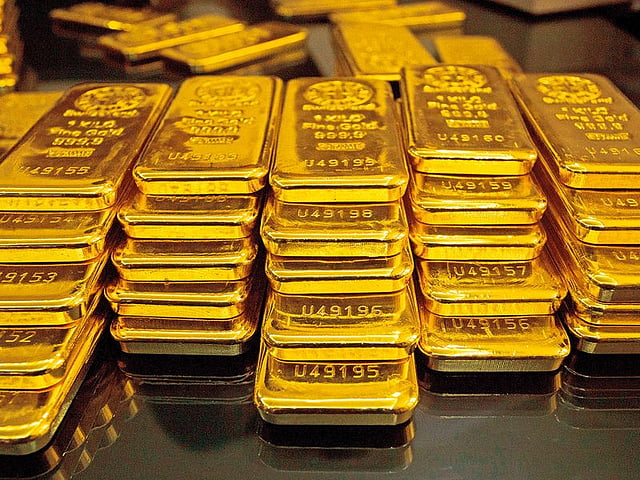
In 2025, gold experienced a stellar performance: it surged over 60% and recorded more than 50 all-time highs, driven by a combination of geopolitical uncertainty, a weakening US dollar, and strong demand from both investors and central banks. As the year ends, many analysts and institutions see 2026 as a much more complex and uncertain landscape — with three distinct scenarios shaping how gold might fare next.
According to the World Gold Council (WGC), the first possibility is a “shallow slip”—a moderately bullish outcome. In this scenario, even if global economic growth slows somewhat without collapsing, gold could still rise by 5–15%, supported by softer interest rates, a weaker dollar, and ongoing interest from central banks and institutional investors.
The second, more bullish path—dubbed the “doom loop”—would be triggered by a deeper global downturn, escalating geopolitical risks, or renewed financial stress. In that event, investors and institutions might flock back to safe‑haven assets, sending gold up by 15–30% or more as demand surges.
The third path is a “reflation return” — a more optimistic economic recovery where stronger growth, rising yields, and a firmer dollar reduce gold’s appeal. In that case, gold could see price moderation or even pullback as investors shift into more growth‑oriented or yield‑bearing assets.
- Thus, 2026 could be a year of consolidation, volatility, or renewed surge for gold — depending heavily on global interest‑rate policy, geopolitical developments, inflation trends, and central‑bank and institutional buying. The one constant: gold remains firmly in the spotlight as a barometer of global economic uncertainty and investor sentiment.